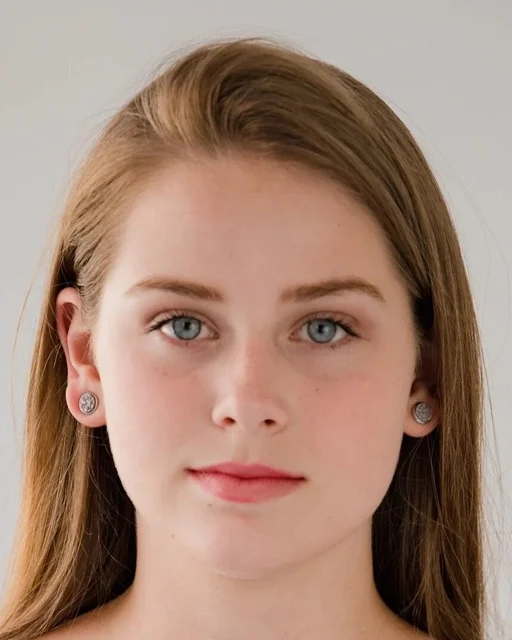
Parting direction
Soft off-center, creating a gentle diagonal instead of reinforcing one continuous vertical line.
Hairstyle recommendations
Start with a face and feature analysis, then unlock personalized guidance for parting, fringe, layers, length, and volume in the Complete Report.
Off-center
parting
Cheek-level
layers
Side
volume
Choose a photo
Use a clear, front-facing photo with the forehead, cheeks, jaw, and chin visible so the analysis can read the facial frame.
Sample report
Representative report excerpt: a soft off-center part, light face-framing layers starting around the cheek-to-jaw area, and movable volume beside the face illustrate how the analysis works without prescribing one fixed style. Only the headline summary is shown here; the full breakdown remains in the Complete Report.
Soft off-center, creating a gentle diagonal instead of reinforcing one continuous vertical line.
Begin light face-framing movement around the cheek-to-jaw area, then let the remaining length fall below it.
Keep the volume movable beside the face rather than concentrating all visible height at the crown.
Visual frame
Hair creates an outer silhouette around the forehead, temples, cheeks, and jaw. Length changes how far that frame extends; a fringe changes how much forehead remains visible; and layers decide where movement and visual weight begin.
Parting and volume placement also redirect attention. A centered part preserves a clear vertical division, a side part introduces diagonal movement, crown volume adds height, and side fullness adds width. These are visual effects to choose from, not fixed rules about what anyone should wear.
Hairstyle direction usually begins with the visible facial outline. If you do not know that baseline yet, use the Face Shape Detector to identify the primary shape and review the proportions behind it.
Face shape is a useful starting point, but hair texture, density, growth pattern, maintenance, and personal style still shape the final choice.
Perceived attractiveness
People do not perceive a face and the surrounding hair as fully separate. One peer-reviewed study found that identical faces received different attractiveness ratings when paired with different hairstyles, and that a hairstyle that framed the face at certain proportions could shift the rating by roughly half a point on a seven-point scale.
A second study using computer-rendered hair varied diameter, density, length, and style while holding the face constant. Thicker, denser hair was rated as younger and healthier, while certain swept or layered styles scored higher on attractiveness — suggesting that volume and movement around the face contribute independently of facial structure.
Read the face-and-hair perception study in Frontiers in Psychology.
Review the controlled rendered-hair experiments in International Journal of Cosmetic Science.
If you want to examine photo-based attractiveness with the same boundaries in view, try the Face Attractiveness Test.
Style families
There is no single exhaustive naming system for haircuts. Salon terminology varies by region, era, texture, and technique, but the following families provide a practical map of common shapes people search for and discuss.
Straight, wavy, curly, and coily describe hair texture rather than mutually exclusive hairstyle families. Each texture can appear across several of the groups below, with different shrinkage, expansion, movement, and maintenance needs.
Buzz cuts, crew cuts, crops, and pixies keep the perimeter close and make the face more visually exposed.
Blunt, textured, or graduated bobs and longer lobs place the perimeter from around the jaw to the shoulders.
Shags, wolf cuts, butterfly cuts, and face-framing layers distribute movement and weight at different heights.
One-length, long blunt, U-shaped, and V-shaped cuts preserve a clearer continuous outline through the ends.
Tapers, fades, undercuts, quiffs, and pompadours combine close sides or edges with deliberate shape above.
Braids, twists, locs, ponytails, buns, and half-up styles reorganize direction, tension, and visible volume.
The public page shows only a compact sample. The Complete Report connects each hairstyle recommendation to your own face and feature measurements while leaving the final cut and technique to your actual hair and stylist.
Compare Complete Report optionsRelated tools
Use a focused detector for one feature, or return to the complete face analysis when you want all results in one connected report.
A face-shape result you can connect to what you see.
A score with clear limits, never a statement of personal worth.
A complete, evidence-led view of what suits your features.
Technique-level guidance for every feature, without brands or judgments.
FAQ
No. Face shape is a starting point for understanding the outer frame, but texture, density, growth pattern, hairline, routine, personal style, and the effect you want all influence the final choice.
The report can describe an intended shape and volume direction, but a photo cannot determine every cutting or styling technique. Adapt the direction to texture, density, shrinkage, damage, growth patterns, and maintenance with a stylist when needed.
No. This tool does not generate synthetic hair images or swap hairstyles onto your photo. It analyzes your facial frame and provides written direction for parting, fringe, layers, length, and volume that you can discuss with a stylist.
Yes. The analysis reads your visible facial outline, proportions, and feature placement from a photo, then generates personalized hairstyle direction. Face shape is the primary input, but the report also considers how fringe, volume, and layers interact with individual features.
There is no universal schedule. Refresh it when the fringe, perimeter, layers, or volume no longer hold the intended shape; short and highly precise styles often need attention sooner than longer, less structured cuts.
Any face shape can wear some form of fringe. The direction depends on forehead height, face length, and the visual effect you want. The report explains which fringe approaches work with your specific proportions rather than applying a one-size-fits-all rule.
Start with one clear photo, understand your visible facial proportions, and unlock personalized hairstyle recommendations in the Complete Report.
Choose my photo