
Inner and Outer Endpoints
Locate the visible ends of the opening first. The direction line depends on those two points remaining readable and free of obstruction.
Direction guide
By KnowMyFace Team
Features
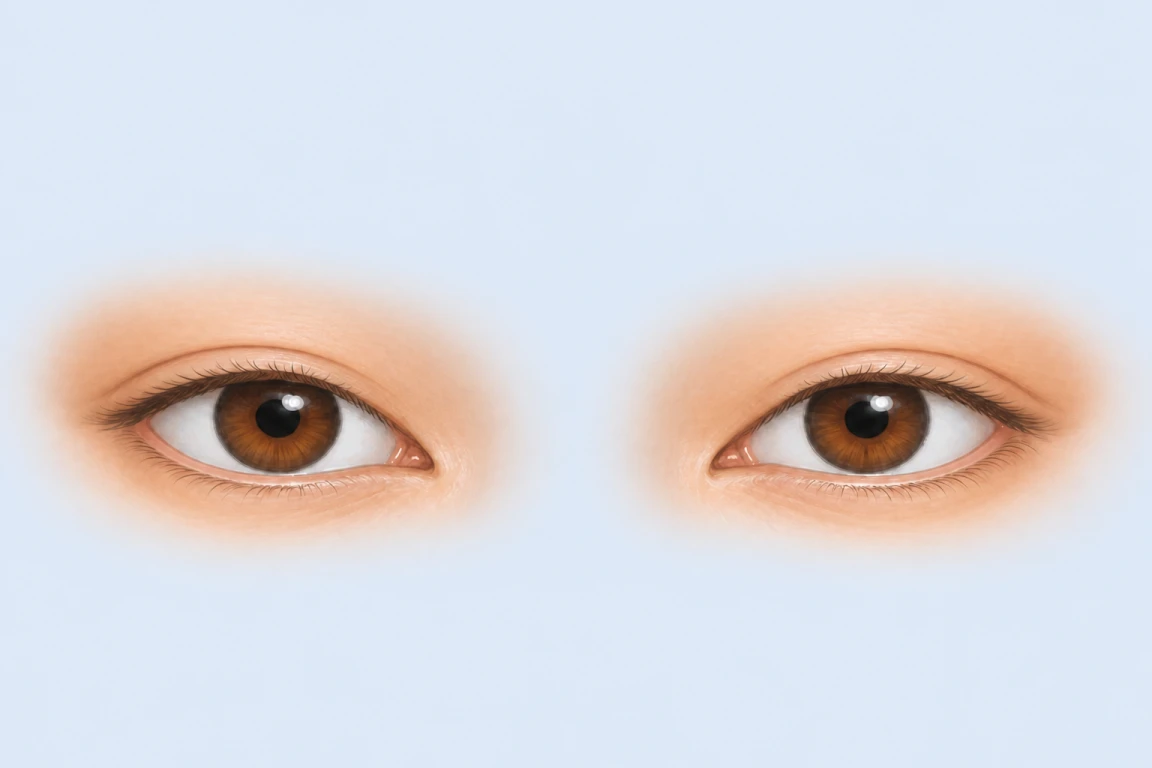
Downturned is a direction label for the relationship between the endpoints of the visible opening. In the same photo, the opening may still look rounder, more tapered, or somewhere in between.
Locate the visible ends of the opening first. The direction line depends on those two points remaining readable and free of obstruction.
With a level head and front-facing view, the outer endpoint sits visually lower than the inner endpoint. Soft differences remain soft differences.
A horizontal reference helps the eye read direction.
Downturned direction can appear with round, almond, or other openings. Naming the direction does not replace the contour description.
Visible geometry
Endpoint height, opening height, width, and taper can all be described from a frontal outline. Geometrical basis of the eyelid contour on PubMed.
Self-check
Use a relaxed, head-level, front-facing photo with even light.
Keep a natural open gaze.
A side turn can lower or raise one outer corner relative to the other and create a false one-sided reading.
Chin-down poses often exaggerate outer-corner drop. Chin-up poses can reverse it. Level posture keeps the cue cleaner.
Keep both endpoints visible.
If the outer endpoint sits visibly lower than the inner endpoint under a level, frontal view, downturned direction is a useful description for that photo. Pair it with a separate contour check, or review both evidence tracks in the Eye Shape Detector. Ideal subject distance study on PubMed.
Compare
Start with the opposite direction label, then separate direction from contour so neither is asked to do the other job.
Shared
Both are direction labels about the relative height of the outer and inner corners.
The difference
Downturned means the outer corner sits lower. Upturned means the outer corner sits higher. Neither label ranks appearance or indicates emotion.
Round eyes illustration
Shared
Both can look soft near the outer lid and retain a full center opening.
The difference
Downturned only names endpoint direction. Round names a taller, fuller contour. A downturned direction can appear on a round opening or on a different contour entirely.
Read more
Continue with the opposite direction page, a contour page, or the photo tool when you need evidence instead of a general explanation.
Compare the opposite outer-corner direction under the same front-view conditions.
Open guideSeparate fuller contour height from endpoint direction when both impressions appear together.
Open guideThe Eye Shape Detector keeps contour and corner-direction evidence available for both eyes instead of collapsing them into one vague phrase.
Open Eye Shape DetectorBrow path and peak position can soften or emphasize the outer eye area without rewriting the direction description.
Open Brow Shape DetectorOptional placement choices can lift, balance, or follow the existing outer-corner direction as a styling preference only.
Open Makeup RecommendationsUpload a clear front-facing photo to compare each outer-corner direction with the opening contour behind it.
See the visible direction in your photo