
Inner and Outer Endpoints
Mark the innermost and outermost points where the upper and lower lid edges meet. Those two points define the direction line being observed.
Direction guide
By KnowMyFace Team
Features
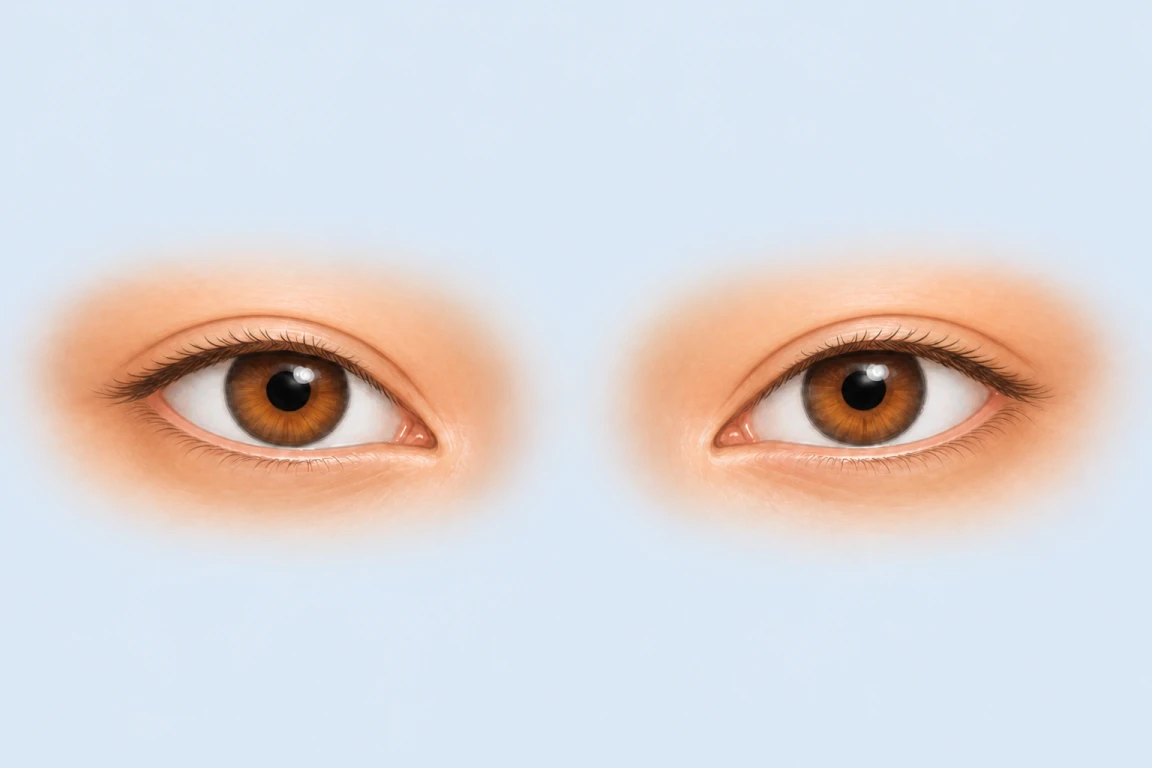
Upturned is a direction label for the relationship between the inner and outer endpoints of the visible opening. It does not, by itself, tell you whether the outline is rounder or more tapered.
Mark the innermost and outermost points where the upper and lower lid edges meet. Those two points define the direction line being observed.
When the head is level and the face is front-on, the outer endpoint sits visually higher than the inner endpoint. Small differences still count only as modest tilt.
Use a simple horizontal reference through the inner corner.
An upturned outer corner can appear on almond, round, or other openings. Direction and contour answer different questions about the same photo.
Visible geometry
Corner direction compares the height of the inner and outer endpoints. Geometrical basis of the eyelid contour on PubMed.
Self-check
Use a relaxed, head-level photo with even light and both corners visible.
Use a natural gaze while comparing the endpoints.
A turned head can raise one outer corner relative to the other and create an uneven direction reading.
This is the key step. Chin-up and chin-down poses readily change the apparent height relationship between the corners.
Use even light with both endpoints visible.
If the outer endpoint sits visibly higher than the inner endpoint under a level, frontal view, upturned direction is a useful description for that photo. Contour still needs its own check. Use the Eye Shape Detector when you want both pieces of evidence from the same image. Ideal subject distance study on PubMed.
Compare
Upturned is most often compared with downturned direction and with almond contour. Keep those comparisons in separate dimensions.
Shared
Both describe the height relationship between the inner and outer corners rather than overall attractiveness.
The difference
Upturned means the outer corner sits higher. Downturned means the outer corner sits lower.
Almond eyes illustration
Shared
Both can create a lifted or elongated impression near the outer lid.
The difference
Upturned is only about corner direction. Almond is about central opening height and corner taper. A person can have one, the other, both, or neither in a given photo.
Read more
Use the adjacent pages when you need the opposite direction, a contour explanation, or the photo tool that returns both kinds of evidence.
Compare the opposite outer-corner direction under the same front-view rules.
Open guideSeparate contour taper from outer-corner lift when the two impressions appear together.
Open guideThe Eye Shape Detector reports opening contour and corner direction from the same photo.
Open Eye Shape DetectorBrow peak and path change how outer-corner direction is framed without rewriting the eye opening itself.
Open Brow Shape DetectorOuter emphasis and liner direction can follow, balance, or de-emphasize an existing corner tilt as a styling choice only.
Open Makeup RecommendationsUpload a clear front-facing photo to see whether each outer corner sits higher, level, or lower, together with the opening contour.
Check visible contour and corner-direction evidence