
Length Over Height
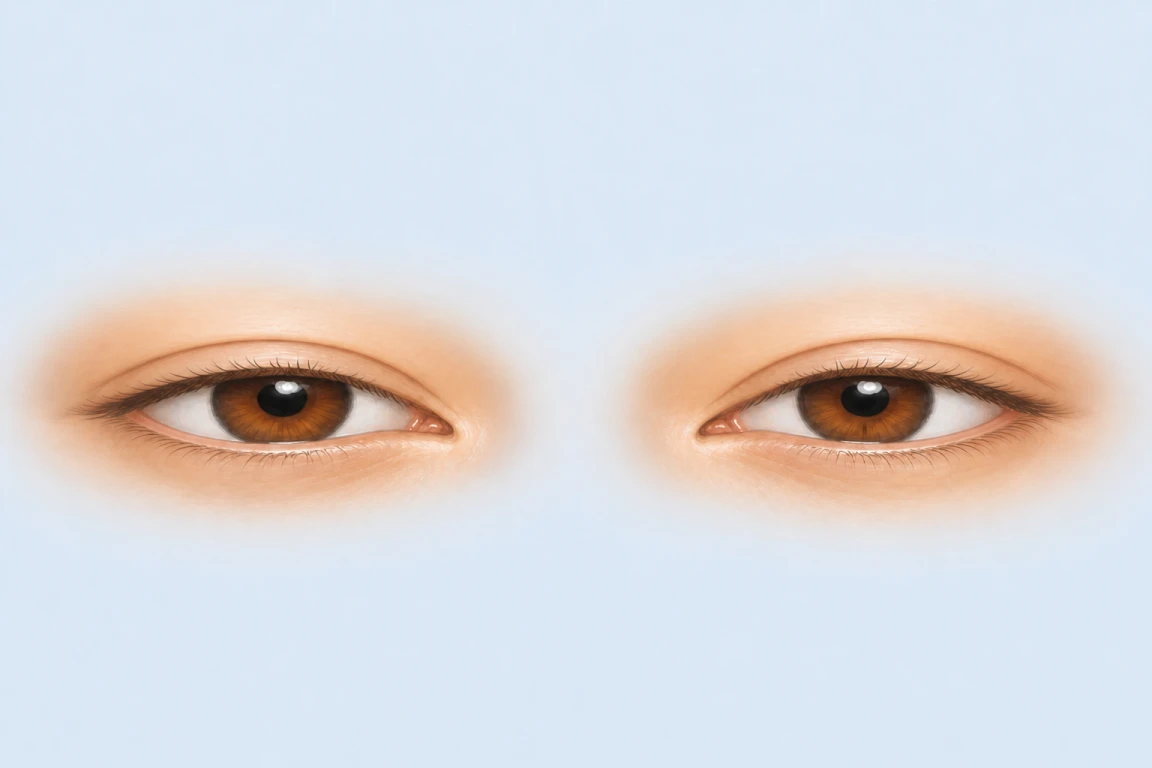
The visible opening reads more extended side to side than tall. Height may remain readable through the center without matching a rounder profile.
Contour guide
By KnowMyFace Team
Features
In a relaxed front view, an elongated opening emphasizes width and extension more than vertical fullness. Corner direction can still sit higher, level, or lower on the same contour.
The visible opening reads more extended side to side than tall. Height may remain readable through the center without matching a rounder profile.
Inner-to-outer length is the dominant impression. The outline looks stretched rather than compact or circular.
The endpoints may taper, but the deciding cue is the longer horizontal proportion, not almond-style central height alone.
An elongated contour can appear with an upturned, downturned, or neutral outer corner. Direction does not replace the contour reading.
Visible geometry
A front-view description compares opening width, height, taper, and the relative height of the inner and outer endpoints. Geometrical basis of the eyelid contour on PubMed.
Self-check
Use a relaxed, head-level, front-facing photo with even light.
Keep a natural open gaze. Squinting shortens height and can make any contour look more extended than it is at rest.
Both eyes should sit fully in view. A side turn lengthens one opening and shortens the other.
Keep the head level.
Use soft front light.
If the front-view opening is clearly longer than it is tall and the overall outline stays extended rather than circular, an elongated contour is a useful description for that photo. Corner direction still deserves its own check in the Eye Shape Detector. Ideal subject distance study on PubMed.
Compare
Elongated is most often confused with almond taper and with a smoother oval opening. Keep length, taper, and corner direction as separate clues.
Elongated eyes illustration
Almond eyes illustration
Shared
Both can look longer than tall and may narrow toward the corners.
The difference
Almond keeps more readable central opening height with clearer two-corner taper. Elongated is decided more by stronger horizontal extension relative to height.
Elongated eyes illustration
Oval eyes illustration
Shared
Both can look longer than a round opening and softer than a sharp pointed silhouette.
The difference
Oval keeps a smoother, moderately tall opening with weaker corner pinch. Elongated pushes the width-to-height relationship further toward a narrow, extended contour.
Elongated eyes illustration
Round eyes illustration
Shared
Both describe the front-view opening rather than ethnicity, mood, or health.
The difference
Round keeps fuller vertical height and softer endpoints. Elongated reduces that vertical fullness and extends the outline side to side.
Read more
Use the adjacent contour pages when the result sits near a boundary, and the direction pages when the outer corner is doing separate work.
The Eye Shape Detector compares each eye for length, height, taper, and outer-corner direction without forcing one exclusive label.
Open Eye Shape DetectorBrow path and peak position change how an extended eye opening is framed without rewriting the contour itself.
Open Brow Shape DetectorOuter emphasis and liner direction can follow or balance an elongated opening as a styling choice only.
Open Makeup RecommendationsUpload a clear front-facing photo to compare opening length, height, taper, and outer-corner direction for each eye.
Explore the visible contour in your photo