
Relative Vertical Span
Compare how much vertical room the nose occupies between the lower brows or inner-eye zone and the upper lip. An extended corridor makes length the first readable pattern.
Nose shape guide · photo-based evidence
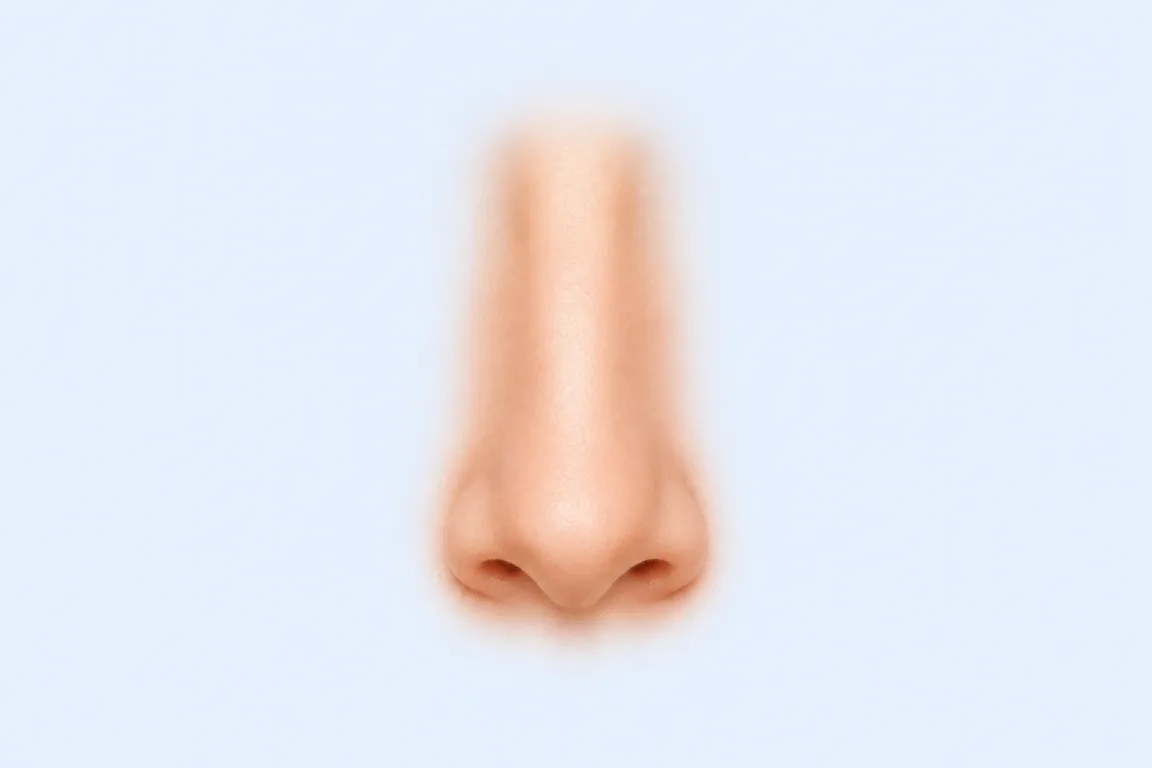
Overview
A long nose shape has a comparatively pronounced bridge-to-tip span within the midface. Compare the vertical space from the upper bridge to the tip against the eyes and upper lip.
Visible features
Compare how much vertical room the nose occupies between the lower brows or inner-eye zone and the upper lip. An extended corridor makes length the first readable pattern.
Trace the central path from the upper bridge through the lower center to the tip. On a long nose shape, that path occupies more of the available midface height.
Tip direction sits beside length rather than replacing it. A longer bridge-to-tip path can finish with a level, slightly raised, or slightly lowered tip.
Detail 1
A long straight nose combines two observations: a longer vertical span and a bridge line that looks relatively continuous from top to tip in the front view. A long nose can look straight without being narrow, and a straight bridge can appear on mid-length or shorter patterns too.
Detail 2
Long thin and narrow long noses combine length down the center with relatively slim width across the bridge or middle. A flatter-looking bridge is a separate detail from length.
Self-check
Use one relaxed, head-level, front-facing photo with even light. Work in order so length is decided before tip or width details.
Look at the space from the eye line to the upper lip and note how much of that corridor the nose occupies. If the structure claims a larger share of that zone than neighboring faces in similar photos, mark a provisional long reading.
Follow the central contour without tilting the photo. Confirm whether the path travels farther before it resolves at the tip, independent of whether the tip looks rounded, pointed, raised, or lowered.
After length is set, observe whether the lower center finishes level, slightly up, or slightly down. Keep that note as context rather than allowing it to override the vertical-span decision.
Compare
Long is most often confused with short overall length and with narrow width. The pairs below isolate one shared cue and one deciding difference.
What they share
Both long and short patterns are judged from the same midface corridor between the eyes and upper lip.
The deciding difference
A long nose claims more of that vertical span, while a short nose looks compact inside the same facial frame. Width and tip shape are separate from this length decision.
Key visual
Imagine a taller center line through the midface for long, and a shorter center line for short, without changing facial width.
What they share
A long pattern and a narrow pattern can appear on the same face when the center looks slim as well as extended.
The deciding difference
Long names relative height of the bridge-to-tip path. Narrow names how little horizontal room the bridge and central width use.
Key visual
Compare a long vertical mark first, then a slim horizontal corridor across the bridge if both are present.
Personal result
The Nose Shape Detector compares front-view length with surrounding midface relationships, then keeps width, bridge, base, and tip evidence visible beside the primary label. Upload a clear photo to see whether a long pattern is the strongest summary for your face and which secondary cues still matter.
Analyze your nose shapeFAQs
Relative vertical span is the main cue. When the bridge-to-tip path claims more of the midface corridor between the eyes and upper lip, the nose reads longer even if width stays modest.
No. Length describes vertical proportion.
Long focuses on how far the structure travels. Drooping tip focuses on lower-center direction.
Yes. A longer center path and a slim bridge or central width often appear together.
No. Straightness describes line continuity.
Read next
Keep reading nearby nose patterns, or continue with related feature analysis tools.
Nose guide
Drooping Tip Nose: What It Is and How to Identify ItAfter length, the next common confusion is lower-center direction. A drooping tip can appear with long or mid-length patterns, so comparing tip orientation after the length decision keeps the two ideas separate.
Nose guide
Short Nose Shape vs Upturned Nose: Key DifferencesIdentify a short nose shape from front-view proportion: compact vertical span, length in facial context, and tip direction, without treating shortness as the same as an upturned tip.
Nose guide
Narrow Nose Shape: What It Looks Like and How to Identify ItLearn how a narrow nose shape is read from bridge width, central width, and base width in context, and how it differs from pointed tip or long length alone.
Feature tool
Face Shape DetectorSee how your overall face outline frames proportion and feature placement.
Feature tool
Eye Shape DetectorContinue with eye-shape cues for another key facial-feature reading.
Feature tool
Lip Shape DetectorExplore lip shape to add lower-face context to your feature guide.