
Bridge Width
Begin at the upper and middle bridge, where slimness often reads first. A narrow bridge leaves a tighter path between the eyes and can make neighboring cheek mass look more open by contrast.
Nose shape guide · photo-based evidence
Overview
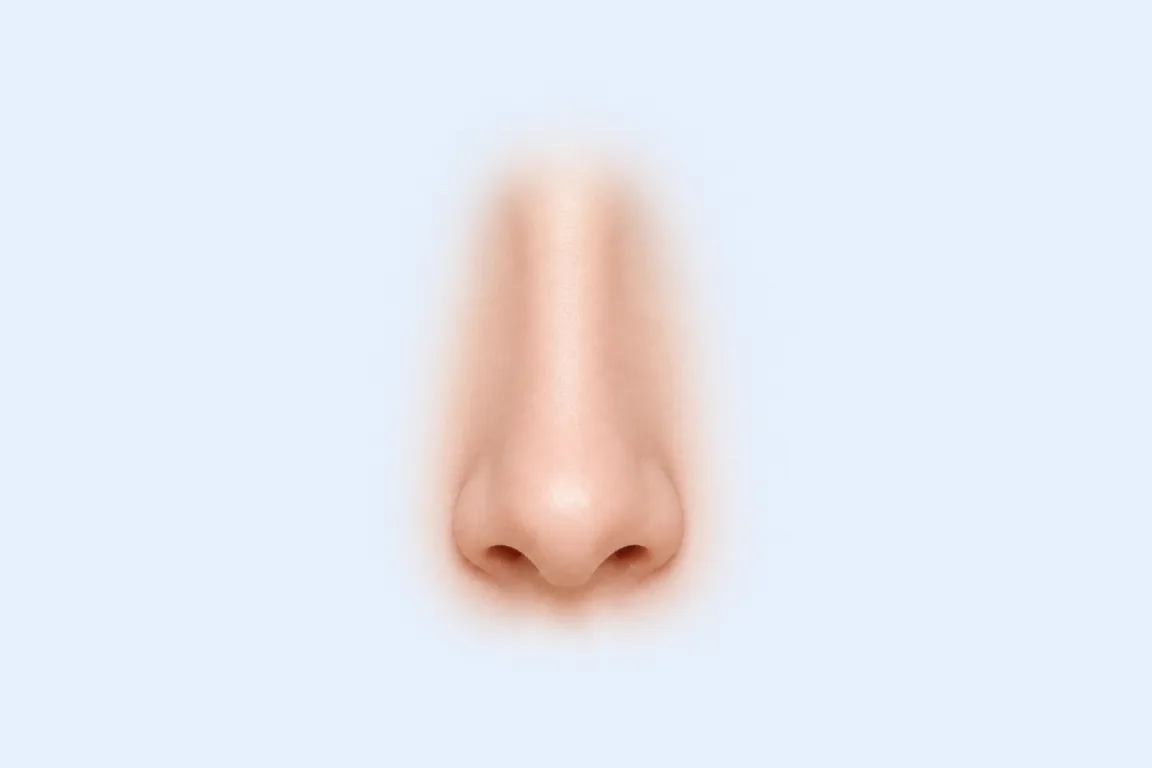
A narrow nose shape has a comparatively slim bridge and central corridor in the front view. Compare bridge, middle, and base width against the inner-eye distance.
Visible features
Begin at the upper and middle bridge, where slimness often reads first. A narrow bridge leaves a tighter path between the eyes and can make neighboring cheek mass look more open by contrast.
Follow the middle corridor where the structure passes between the cheeks. On a narrow pattern, that band stays restrained rather than expanding early into a broad midsection.
Finish by reading the base against the same face. Some narrow noses remain slim all the way down; others widen only slightly at the alar region while still reading as narrow overall.
Detail 1
A long narrow nose combines a longer vertical span with slim horizontal distribution. Compare midface height for length, then bridge and central width for narrowness.
Detail 2
Everyday language sometimes blends narrow, thin, small, and pointed into one idea, but the front-view traits split cleanly. Narrow and thin usually speak to width.
Self-check
Use a level, front-facing photo with both flanks of the bridge visible. Judge width zones before tip shape.
Look between the eyes and ask whether the upper and middle bridge look comparatively slim for that face. Mark bridge slimness as the first width cue.
Trace the middle band without turning the photo. Confirm whether the corridor stays tight rather than expanding into a broad midsection.
Compare the base with mouth width and lower midface. A modest base flare can still sit inside an overall narrow reading if slimness remains the strongest pattern.
Compare
Narrow is most often confused with wide breadth and with pointed tip contour. Compare width first, tip second.
What they share
Narrow and wide are both width readings judged relative to the eyes, cheeks, and mouth in the same frontal photo.
The deciding difference
Narrow keeps the bridge and central corridor comparatively slim. Wide claims more horizontal room in one or more zones along the structure.
Key visual
Picture a slim center band for narrow and a broader horizontal band for wide against identical eye spacing.
What they share
A narrow pattern and a pointed tip can appear together when a slim corridor ends in a tapered lower center.
The deciding difference
Narrow names width distribution. Pointed names tip taper and definition.
Key visual
Read the horizontal corridor first, then look only at whether the tip outline narrows into a defined point.
Personal result
Front-view analysis compares bridge-width profile and overall width relationships before summarizing the strongest pattern. Upload a clear photo to see whether narrow is the primary result for your face and how length or tip cues sit beside that width reading.
Analyze your nose shapeFAQs
No. Narrow is about width.
Yes. Length and width are independent axes.
A narrow bridge is slim through the upper or middle center line. A narrow base stays restrained lower near the alar region.
Relative horizontal distribution decides it. Compare the nose with inner-eye spacing and mouth width, then see whether the corridor stays slim or claims more breadth.
Read next
Keep reading nearby nose patterns, or continue with related feature analysis tools.
Nose guide
Long Nose Shape: What It Looks Like and How to Identify ItIf the slim corridor also seems vertically extended, compare a long reading next. Length and narrow width often travel together, and the long guide keeps that second axis clear.
Nose guide
Wide Nose Shape: What It Looks Like and How to Identify ItSee how a wide nose shape is identified from relative width, bridge-to-base distribution, and tip breadth in a front-facing photo, plus clear comparisons with narrow and rounded-tip patterns.
Nose guide
Pointed Nose Shape: What It Looks Like and How to Identify ItIdentify a pointed nose shape from tip taper, lower-center definition, and bridge width in context, including long pointed and sharp pointed variations.
Feature tool
Face Shape DetectorSee how your overall face outline frames proportion and feature placement.
Feature tool
Eye Shape DetectorContinue with eye-shape cues for another key facial-feature reading.
Feature tool
Lip Shape DetectorExplore lip shape to add lower-face context to your feature guide.