
Relative Width
Start with overall front-view breadth. Compare the nose with the eyes and mouth, then locate where that breadth is concentrated.
Nose shape guide · photo-based evidence
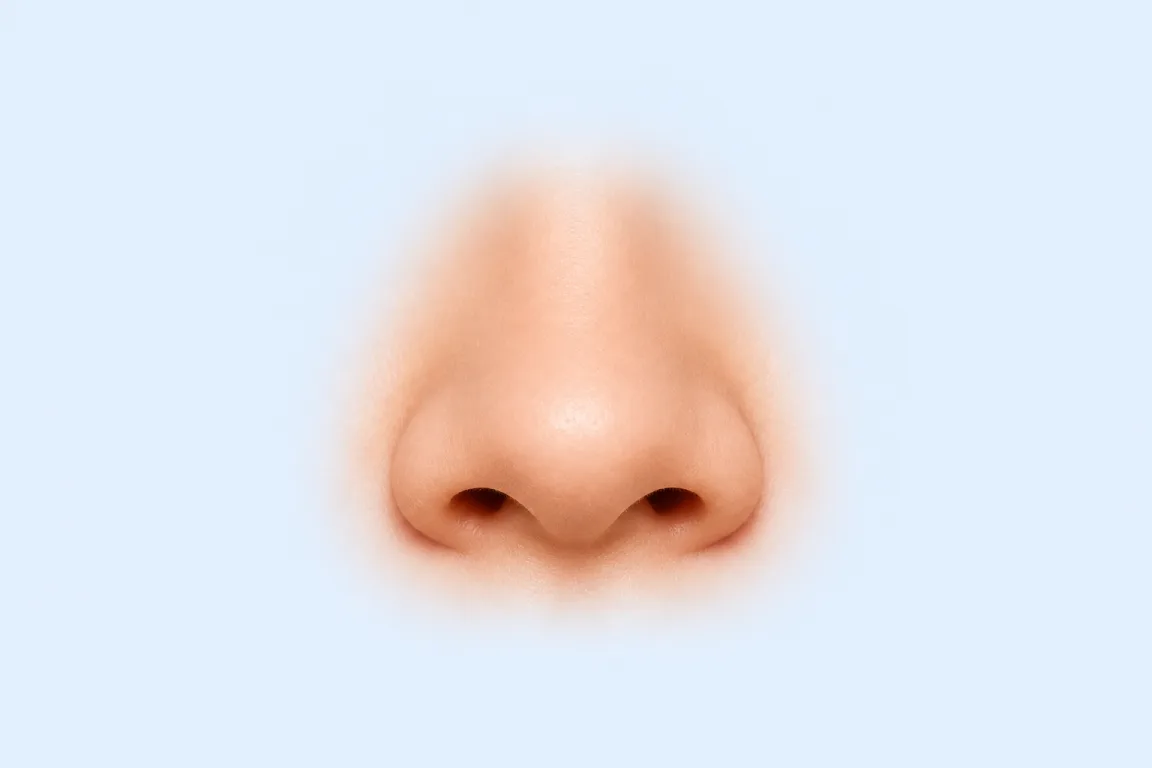
Overview
A wide nose shape has stronger horizontal breadth in the front view. Width may concentrate at the bridge, through the middle, across the base, or in more than one zone.
Visible features
Start with overall front-view breadth. Compare the nose with the eyes and mouth, then locate where that breadth is concentrated.
Scan from the upper bridge through the middle and down to the base. Some wide patterns stay broad high on the bridge, while others remain moderate above and widen mainly near the alar base.
Tip breadth can reinforce a wide pattern without defining it alone. A broader lower center may sit on a wide base, but a narrower tip can still accompany a wide bridge or midsection.
Detail 1
Wide nose and broad nose both describe stronger horizontal presence in the front view. Overall width describes the nose across the face, while bridge width identifies where that width begins.
Detail 2
Wide bulbous describes overall breadth with a fuller, more rounded tip mass. Width is the broader pattern, while the rounded detail sits at the lower center.
Self-check
Use a relaxed front-facing photo with both sides of the nose equally lit. Map width before tip contour.
Compare the nose with the inner-eye spacing and mouth width in the same frame. If horizontal presence is the strongest first impression, mark a provisional wide reading.
Scan upper, middle, and base zones separately. Note whether breadth is highest at the bridge, midsection, base, or across several zones.
Look at the lower-center width only after the broader map is clear. Record tip fullness as support or as a secondary trait rather than the whole answer.
Compare
Wide is most often confused with narrow width and with rounded-tip contour. Keep width distribution separate from tip shape.
What they share
Wide and narrow are opposite ends of the same front-view width axis and are both judged relative to nearby facial features.
The deciding difference
Wide claims more horizontal room through the bridge, middle, base, or a combination of those zones. Narrow keeps the central corridor comparatively slim.
Key visual
Imagine a broader horizontal band across the nose for wide and a slim corridor for narrow against the same eye spacing.
What they share
Wide patterns and rounded-tip patterns can both look fuller in the lower nose.
The deciding difference
Wide is a whole-structure or multi-zone width reading. Rounded tip focuses on soft circular contour at the lower center, which may or may not accompany broader base or bridge width.
Key visual
First mark overall breadth, then look only at whether the tip outline itself rounds softly.
Personal result
The detector compares relative width, bridge profile, base relationships, and tip breadth from a front-facing photo, then summarizes the strongest pattern. Upload a clear image to see whether wide is the primary label for your proportions and how the supporting zones distribute.
Analyze your nose shapeFAQs
In everyday descriptions, the two usually point to stronger front-view width. Broad often behaves like a synonym for overall breadth, while wide can also be narrowed to a zone such as the bridge or base.
A wide bridge shows more horizontal room through the upper or middle center line. A wide base concentrates breadth lower, near the alar area.
Wide is a width pattern across the structure. Bulbous or rounded tip language focuses on lower-center fullness.
Compare the nose with inner-eye distance, mouth width, and midface scale in the same photo.
Read next
Keep reading nearby nose patterns, or continue with related feature analysis tools.
Nose guide
Balanced Nose Proportions: What They Mean and How to Identify ThemIf width is only mildly elevated and no single zone dominates, compare a balanced-proportion reading next. That page explains when length, width, and tip cues sit near the middle together instead of spotlighting one trait.
Nose guide
Narrow Nose Shape: What It Looks Like and How to Identify ItLearn how a narrow nose shape is read from bridge width, central width, and base width in context, and how it differs from pointed tip or long length alone.
Nose guide
Rounded Tip Nose vs Bulbous Nose Tip: Key DifferencesUnderstand a rounded tip nose from tip roundness, tip width, and base context, including how it differs from a bulbous tip and how a straight bridge can still end in a soft tip.
Feature tool
Face Shape DetectorSee how your overall face outline frames proportion and feature placement.
Feature tool
Eye Shape DetectorContinue with eye-shape cues for another key facial-feature reading.
Feature tool
Lip Shape DetectorExplore lip shape to add lower-face context to your feature guide.