
Bridge-to-Tip Direction
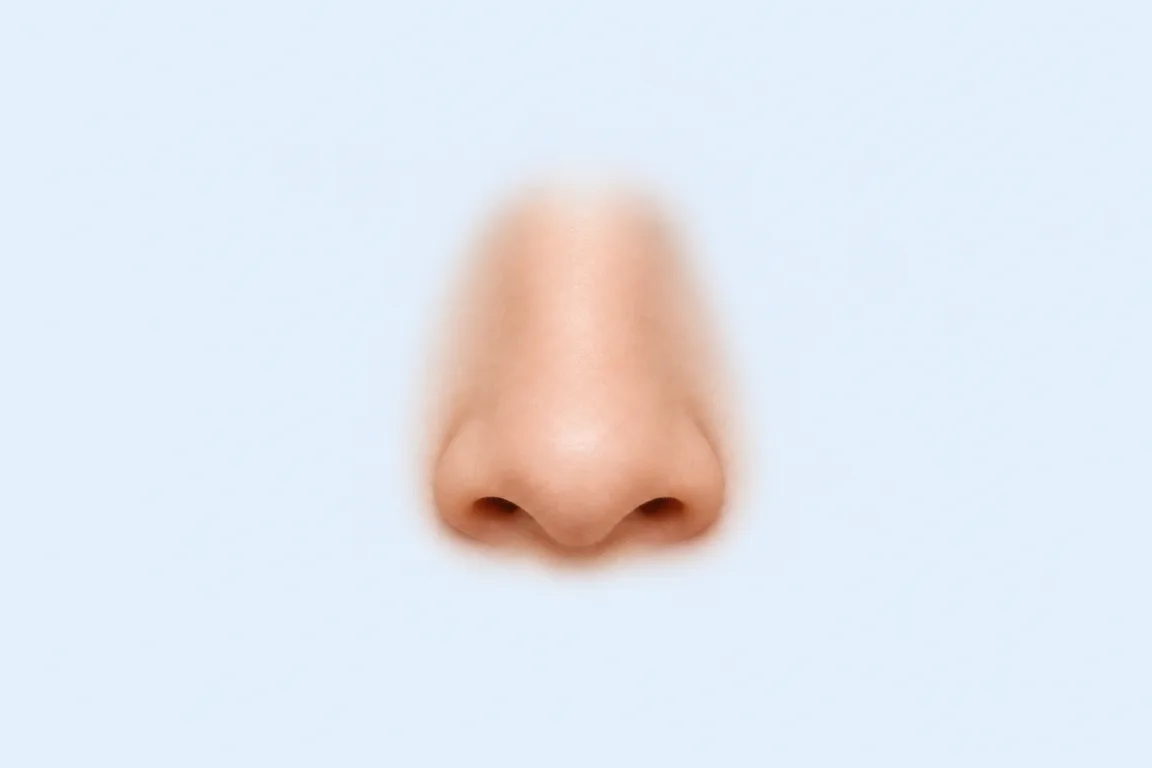
Trace the center line and watch what happens as it approaches the tip. On a drooping tip pattern, the finish continues downward rather than leveling off or lifting.
Nose shape guide · photo-based evidence
Overview
A drooping tip nose has a lower-center contour that finishes with a visible downward tendency. Compare the direction from bridge through tip.
Visible features
Trace the center line and watch what happens as it approaches the tip. On a drooping tip pattern, the finish continues downward rather than leveling off or lifting.
Look at the outline around the tip mass itself. A descending lower-center contour often softens or lengthens the visual finish under the bridge path without automatically changing base width.
Tip taper describes how quickly the lower center narrows or softens as it ends. A drooping tip can look tapered, fuller, or somewhere between.
Detail 1
Drooping nose is a broader everyday phrase that may refer to overall impression, lower-center direction, or both. Drooping tip nose narrows the claim to the tip path itself.
Detail 2
Bulbous droopy combinations add lower-center fullness on top of descent. In that pair, direction remains the drooping cue and fullness remains the tip-contour cue.
Self-check
Use a relaxed frontal photo with a level chin. Decide tip direction before length.
Follow the center path and note whether the finish descends.
Look at the outline around the tip. Confirm that the local contour supports a downward finish rather than a lift.
After direction is clear, note whether the tip looks tapered or fuller, then compare midface span only if length still seems important.
Compare
Drooping tip is most often confused with upturned direction and with pointed tip contour. Keep direction separate from taper.
What they share
Drooping tip and upturned both describe lower-center orientation instead of overall width.
The deciding difference
Drooping tip finishes with a descending path. Upturned finishes with a lifted or more open path.
Key visual
Compare a downward tip arrow for drooping tip with an upward tip arrow for upturned on the same bridge line.
What they share
A drooping tip and a pointed tip can appear together when a descending finish also tapers.
The deciding difference
Drooping tip names direction. Pointed names lower-center taper and definition.
Key visual
First mark whether the tip path goes down, then check whether the outline narrows into a defined point.
Personal result
The detector evaluates tip direction with surrounding length, width, and contour evidence so a downward finish is not mistaken for overall size alone. Upload a clear photo to get a personal result that keeps drooping-tip cues beside the rest of the proportion map.
Analyze your nose shapeFAQs
No. Drooping tip is a direction cue at the lower center.
Drooping tip focuses on downward orientation. Pointed focuses on taper and definition.
Yes. Fuller lower-center mass and descending direction are independent layers.
Keep the head level, use even frontal light, and follow the center path to the finish. Decide whether the end lifts, stays level, or descends before adding length notes.
Read next
Keep reading nearby nose patterns, or continue with related feature analysis tools.
Nose guide
Long Nose Shape: What It Looks Like and How to Identify ItIf the descending finish also seems to sit on an extended midface span, compare a long reading next. Separating direction from length keeps both cues useful.
Nose guide
Upturned Nose Shape: What It Looks Like and How to Identify ItIdentify an upturned nose shape from tip direction, tip-to-nostril relationship, and length in context, including slightly upturned and button-like variations.
Nose guide
Pointed Nose Shape: What It Looks Like and How to Identify ItIdentify a pointed nose shape from tip taper, lower-center definition, and bridge width in context, including long pointed and sharp pointed variations.
Feature tool
Face Shape DetectorSee how your overall face outline frames proportion and feature placement.
Feature tool
Eye Shape DetectorContinue with eye-shape cues for another key facial-feature reading.
Feature tool
Lip Shape DetectorExplore lip shape to add lower-face context to your feature guide.