
Visible Tip Direction
Focus on the lower-center contour and ask whether the tip path rises slightly as it finishes.
Nose shape guide · photo-based evidence
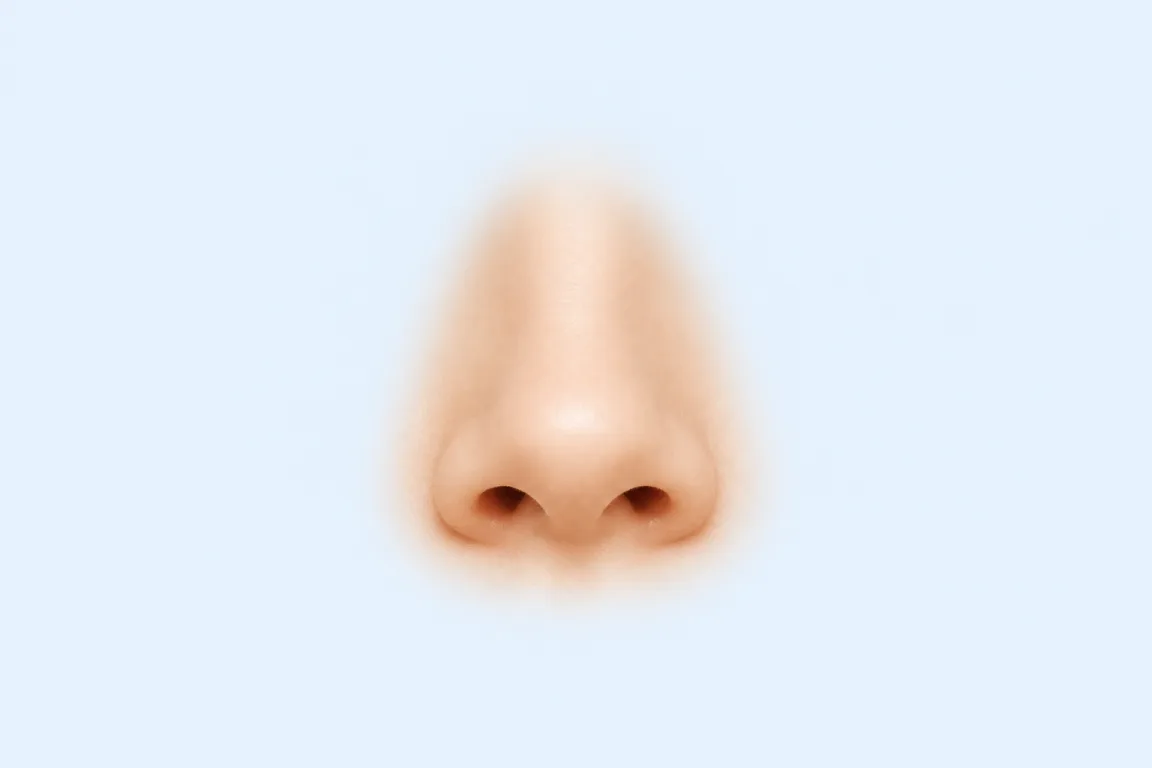
Overview
An upturned nose shape has a visible lift at the lower center. The tip-to-nostril relationship can reinforce that upward finish.
Visible features
Focus on the lower-center contour and ask whether the tip path rises slightly as it finishes.
Upturned patterns often change how the tip sits over the nostril openings in the front view. More of the lower opening may be visible, or the tip may sit so the lower finish looks open rather than closed and descending.
After tip direction is set, place the structure in its midface length context. Some upturned patterns sit on a short span, while others appear on mid-length or longer bridges.
Detail 1
Slightly upturned language usually means a mild lift at the tip without a dramatic change in lower-center mass. Upturned button nose language adds a softer, more compact tip impression on top of that direction cue.
Detail 2
An upturned nose tip can sit on short, mid-range, or longer vertical spans and on slim or broader width maps. Compare the lift first, then bridge-to-tip length and bridge and base width.
Self-check
Use a relaxed, head-level frontal photo. Decide tip direction before length or width.
Look at the lower center and ask whether the tip path lifts rather than staying level or descending.
Note whether the tip sits over a more open lower finish in the front view.
Only after direction is clear, record whether the span is short, mid, or longer and whether width is slim, balanced, or broad. Keep those notes independent.
Compare
Upturned is most often confused with drooping tip direction and with short length. Separate orientation from span.
What they share
Upturned and drooping tip both focus on lower-center direction rather than overall width.
The deciding difference
Upturned finishes with a lifted or more open tip path. Drooping tip finishes with a descending lower-center contour.
Key visual
Imagine a small upward arrow at the tip for upturned and a small downward arrow for drooping tip on the same bridge path.
What they share
Upturned and short can appear together when a compact span also ends with a lifted tip.
The deciding difference
Upturned names tip orientation. Short names vertical span.
Key visual
First mark tip direction, then compare how much midface height the whole nose claims.
Personal result
Photo analysis looks at tip orientation together with length, width, and proportion cues so one raised finish is not forced to explain every trait. Upload a clear front-facing image for a personal result that keeps tip direction and supporting measurements visible side by side.
Analyze your nose shapeFAQs
Slightly upturned mainly describes mild tip lift. Button-like wording usually adds a softer, more compact tip impression on top of that direction cue.
No. Tip direction and length are independent.
Yes. Wide upturned and long upturned combinations are common because width and length do not erase tip orientation.
Upturned is about direction. Rounded is about soft circular contour.
Read next
Keep reading nearby nose patterns, or continue with related feature analysis tools.
Nose guide
Rounded Tip Nose vs Bulbous Nose Tip: Key DifferencesIf the lifted finish also looks soft rather than tapered, compare a rounded tip next. That page isolates lower-center contour so direction and roundness stay separate even when everyday language blends them.
Nose guide
Drooping Tip Nose: What It Is and How to Identify ItLearn how a drooping tip nose is identified from bridge-to-tip direction, lower-center contour, and tip taper, including smiling context and combinations with fuller tips.
Nose guide
Short Nose Shape vs Upturned Nose: Key DifferencesIdentify a short nose shape from front-view proportion: compact vertical span, length in facial context, and tip direction, without treating shortness as the same as an upturned tip.
Feature tool
Face Shape DetectorSee how your overall face outline frames proportion and feature placement.
Feature tool
Eye Shape DetectorContinue with eye-shape cues for another key facial-feature reading.
Feature tool
Lip Shape DetectorExplore lip shape to add lower-face context to your feature guide.